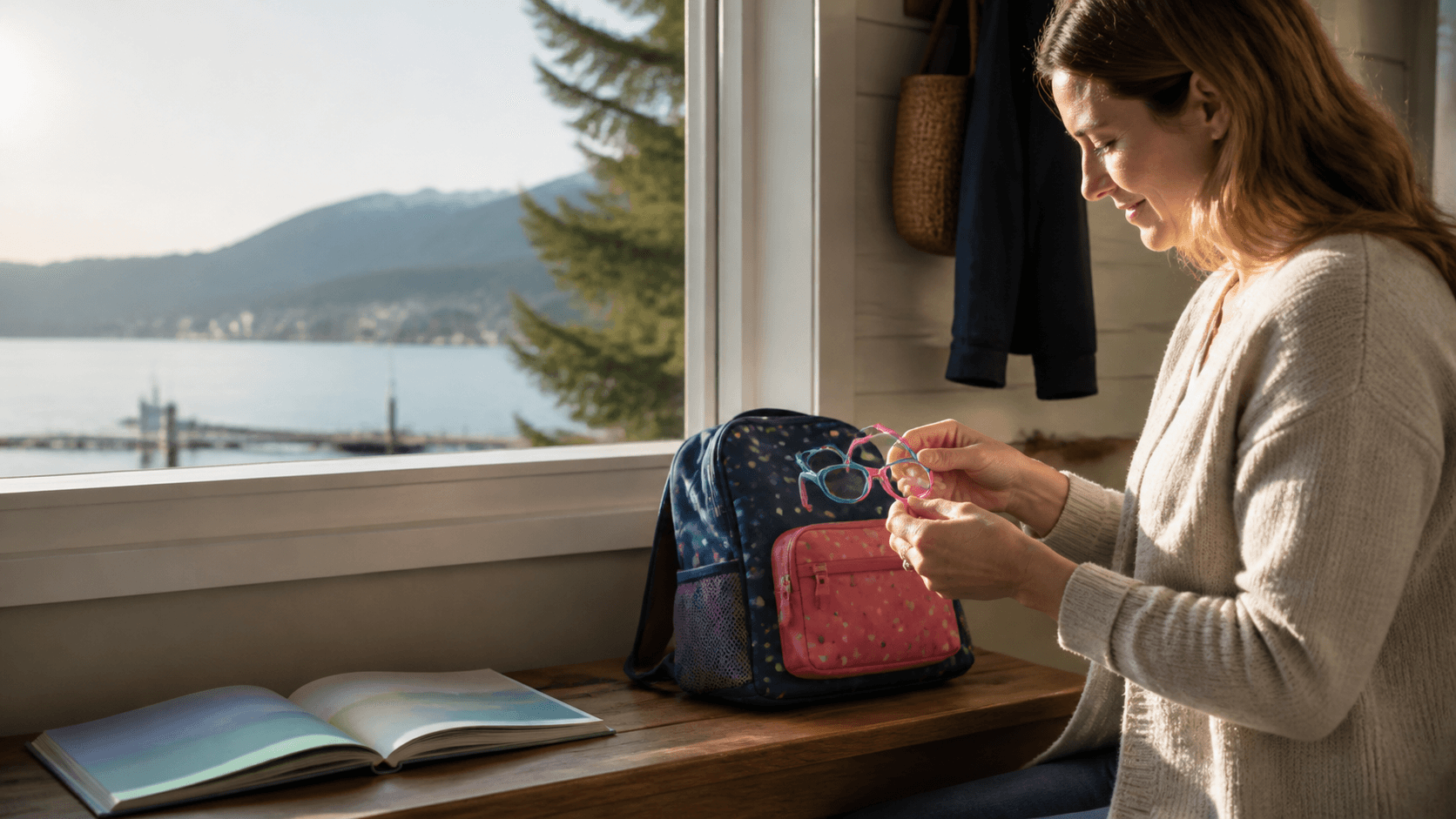
Myopia, also called nearsightedness, often starts during childhood and may change as a child's eyes grow. Children with myopia can usually see books and screens clearly but may struggle with the classroom board, faces across a room, or street signs.
Early eye care helps us look beyond whether glasses are needed today. We can also review prescription changes, eye health, family history, and signs that closer monitoring may be helpful.
Could your child be showing early signs of myopia?
Children do not always say that their vision is blurry. They may assume everyone sees at a distance the same way they do, or they may quietly adapt by moving closer.
Signs we encourage parents to watch for include:
- Squinting to see distant objects
- Sitting unusually close to the television
- Holding books or devices very close
- Headaches or tired eyes after school
- A teacher mentioning difficulty seeing the board
An eye exam can check much more than a child's need for glasses. During children's eye exams, we assess vision, eye health, and changes that may point to a need for ongoing myopia monitoring. Children do not need to complain about blurry vision for us to find a concern.
What causes myopia in children?
Myopia is linked to a mix of genetic and environmental factors. If one or both parents are myopic, their child has a greater chance of becoming myopic too. Family history is important, but it is not the only piece of the picture.
Guidance from the Canadian Association of Optometrists and the International Myopia Institute notes that less time outdoors and long periods of close work have been associated with myopia development and progression. Close work can include reading, homework, gaming, and digital-device use.
That does not mean screens are the only cause of myopia, or that parents should blame themselves. Many children need screens for school, connection, and fun. Instead, we encourage reasonable habits that support visual comfort as part of an overall plan:
- Make outdoor time part of regular family routines
- Encourage breaks during long stretches of close work
- Keep reading material and screens at a comfortable distance
- Use comfortable lighting for homework and reading
These habits do not replace regular eye examinations. Each child's eyes, family history, and daily routine are different.
Can a child be at risk before becoming myopic?
Yes. Some children may have risk factors for future myopia before they are actually nearsighted. Many young children are naturally a little farsighted, and that farsightedness often decreases gradually as the eyes grow.
When a child has less farsightedness than expected for their age, we may want to watch their vision more closely. This does not mean the child will definitely develop myopia. It simply gives us useful information when considered alongside other factors.
Higher risk may be present when there is:
- A strong family history of myopia
- A prescription that changes quickly
- Early loss of expected farsightedness
- Signs of increasing eye growth
Regular examinations matter even when school seems to be going well and there are no complaints at home. A comprehensive eye examination can establish a baseline and help us spot small changes before they become more noticeable.
Why does myopia progression matter later in life?
Myopia is about more than needing stronger glasses. Higher levels of myopia are associated with a greater lifetime risk of eye conditions such as retinal detachment, glaucoma, myopic macular degeneration, and other retinal concerns.
This is why myopia management focuses on slowing myopia progression and excessive eye growth when it is clinically appropriate. Management may help reduce the amount of myopia a child develops over time, although results vary from child to child.
Ongoing monitoring allows us to review changes as a child grows. We can assess their prescription, eye health, and eye growth over time, then update recommendations when needed. Peer-reviewed research and guidance from the International Myopia Institute support the importance of monitoring children who are myopic or may be at higher risk.
What does myopia management for kids in North Vancouver involve?
Myopia management for kids in North Vancouver should be individualised. The right approach depends on a child's age, prescription, rate of change, eye growth, family history, daily activities, and ability to follow the recommended plan.
After an examination, we may discuss options such as specialised myopia-control spectacle lenses, myopia-control soft contact lenses, low-dose atropine eye drops, selected combination therapy, and regular monitoring. No single option is right for every child.
When clinically appropriate and available, options may include:
- MiYOSMART spectacle lenses
- Stellest spectacle lenses
- MiSight 1 day soft contact lenses
- ACUVUE ABILITI 1-Day soft contact lenses
Dr. Cyrus Chalie, OD, will explain which options may suit your child's eyes and routine. The goal is to make decisions based on a complete clinical picture, not simply on a current glasses prescription.
When should you book a child's eye exam?
An eye examination is worth considering if your child squints, struggles to see at a distance, sits very close to screens, has frequent prescription changes, or has a strong family history of myopia. Small vision changes can be easy to miss when children adjust their behaviour instead of describing what they see.
Support Your Child's Vision as They Grow
We can assess your child's vision and discuss options for myopia management for kids in North Vancouver. At NORViSTA Eye Care, our team provides clear guidance tailored to your child's needs and regular monitoring as their eyes develop. Contact us to book an eye exam.
FAQs
Can my child have myopia without complaining about blurry vision?
Yes. Children may adapt to blurry distance vision or may not realize their vision is different from other people's. Regular eye exams can help identify changes early.
Does more screen time cause myopia?
Myopia has several contributing factors, including family history and environmental influences. Long periods of close work and less outdoor time have been associated with myopia, but an eye exam is the best way to assess an individual child's risk.
Can glasses make myopia worse?
Properly prescribed glasses correct vision. A child's myopia may still progress as their eyes grow, which is why regular monitoring is important.
What if my child suddenly loses vision or has an eye injury?
Sudden vision loss, chemical exposure, or an eye injury needs emergency care right away.